
Why Closed or Partially Closed Facilities Still Attract Wildlife
Posted by Securr Blogger on
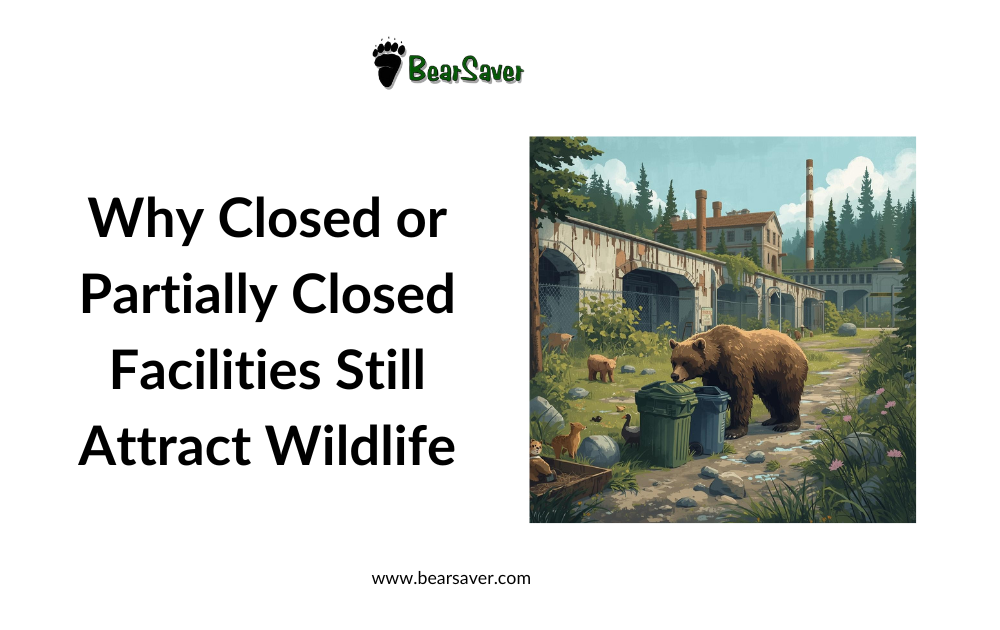
Even when a facility shuts down temporarily or operates at reduced capacity, wildlife activity often increases rather than disappears. Parks, campgrounds, construction sites, commercial properties, and seasonal facilities frequently assume that fewer people means fewer problems. Unfortunately, animals—especially bears—don’t see it that way.
Closed or partially closed sites can unintentionally become prime targets for wildlife due to residual scents, inconsistent service schedules, and unattended waste areas. Understanding why this happens is the first step toward preventing costly damage, safety risks, and long-term habituation of animals to human food sources.
Residual Scents Don’t Close When You Do
One of the most common misconceptions is that removing foot traffic removes attraction. In reality, smell is the primary driver for wildlife.
Trash enclosures, dumpsters, and trash cans retain food odors long after a facility closes. Even empty containers can emit strong residual scents from:
-
Food waste residue
-
Beverage containers
-
Used packaging
-
Cleaning chemicals mixed with organic waste
Bears and other wildlife have an extraordinary sense of smell and can detect these odors from miles away. When a site becomes quiet, those lingering scents become even more noticeable. Without human activity to deter them, animals feel safer investigating.
If waste is stored in standard commercial trash cans or poorly secured enclosures, animals quickly learn that the site offers an easy, low-risk food reward.
Inconsistent Service Schedules Create Opportunity
During partial closures or seasonal shutdowns, waste service schedules are often reduced or irregular. Trash may sit longer than usual, increasing odor buildup and overflow risk.
Inconsistent schedules can lead to:
-
Overfilled trash containers
-
Loose bags placed outside cans
-
Delayed pickup after events or limited operations
Wildlife quickly adapts to these patterns. Once animals discover a reliable food source, they return repeatedly—and bring others with them. Bears, in particular, are intelligent and persistent. A single successful break-in can turn a location into a long-term problem area.
Unattended Sites Remove Deterrents
Human presence alone acts as a deterrent. When facilities are closed or lightly staffed, wildlife feels emboldened.
Unattended sites often lack:
-
Regular monitoring
-
Immediate cleanup of spilled waste
-
Rapid response to damaged containers
This combination creates ideal conditions for animals to explore, test, and ultimately defeat unsecured trash systems. Once bears learn how to access food at a site, they may become aggressive, lose fear of humans, and require relocation or euthanasia—outcomes no facility wants to face.
Why Animal-Proof Trash Cans Matter—Even When Closed
The most effective way to protect closed or partially closed facilities is to eliminate access to food entirely. This means investing in proven, animal-resistant waste solutions that function without human oversight.
That’s where BearSaver® makes a critical difference.
BearSaver specializes in bear-resistant, animal-proof commercial trash cans and enclosures designed to withstand the strength, intelligence, and persistence of wildlife—24/7.
Highlight: BearSaver BE Series Single Trash Enclosure (BE1)
The BearSaver BE Series Single Trash Enclosure (BE1) is engineered for locations where reliability is non-negotiable—especially during closures or low-staff periods.
Key advantages include:
-
Certified Bear-Resistant Design
Built to prevent access by bears and other wildlife, even when unattended. -
Heavy-Duty Steel Construction
Withstands prying, tipping, and repeated attempts without failure. -
Secure Locking Mechanism
Prevents animals from opening the enclosure while remaining user-friendly for authorized access. -
Ideal for Commercial & Public Spaces
Perfect for parks, campgrounds, resorts, construction sites, municipalities, and seasonal facilities.
By eliminating access to food odors and waste, BearSaver enclosures stop wildlife attraction at the source—before animals ever associate your site with a reward.
A Proactive Approach Saves Money—and Wildlife
Facilities often wait until wildlife damage occurs before upgrading waste systems. By then, the costs can include:
-
Property damage
-
Liability risks
-
Emergency service calls
-
Regulatory scrutiny
-
Harm to animals
Installing bear-resistant trash cans before closures—or maintaining them year-round—prevents these outcomes entirely. It’s a proactive investment that protects people, property, and wildlife alike.
Keep Wildlife Wild, Even When You’re Closed
Closed or partially closed facilities don’t have to become wildlife magnets. By addressing residual scents, eliminating inconsistent waste access, and securing unattended sites, you remove the incentives that draw animals in.
With BearSaver’s proven animal-proof trash enclosures, you can ensure that your facility remains secure, compliant, and wildlife-safe—whether you’re open, closed, or operating at limited capacity.