
Understanding Attractant Pathways: How Scents Travel Through a Park Environment
Posted by Securr Blogger on
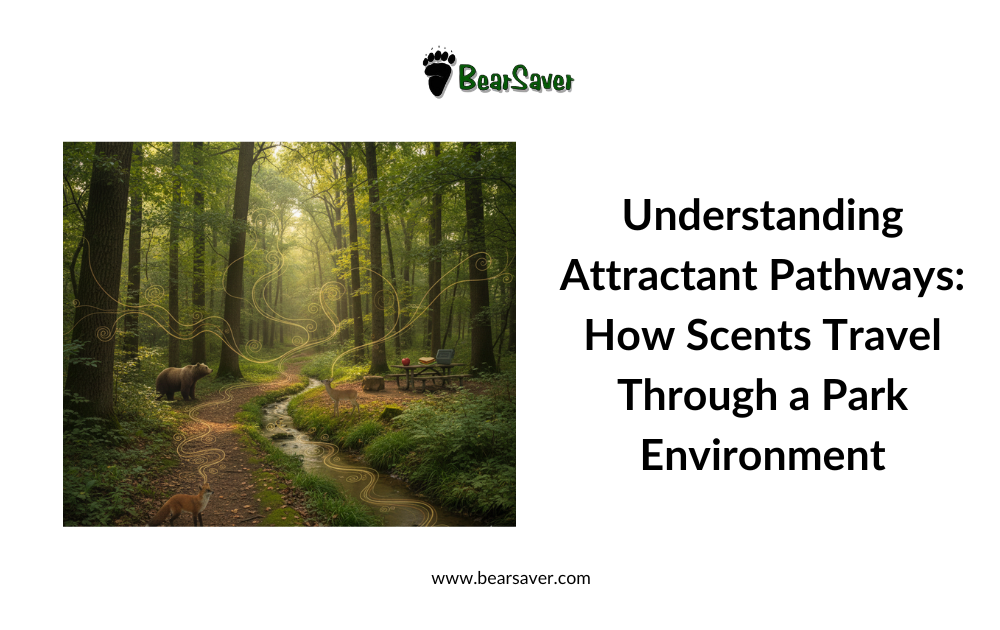
In parks, campgrounds, trail systems, and public recreation areas, wildlife encounters rarely happen by chance. They are often the result of invisible forces known as attractant pathways—the routes that food scents travel through air, terrain, and vegetation to reach animals with highly sensitive noses. Understanding how these pathways work is critical for park managers, municipalities, and facility planners who want to reduce human–wildlife conflict, protect animals, and maintain safe, clean public spaces.
At the center of this challenge is waste management. Improperly contained trash is one of the strongest and most persistent attractants in any park environment. This is where engineered solutions like BearSaver® animal-proof commercial trash cans play a crucial role.
How Airflow Carries Food Odors
Airflow is the primary vehicle for scent transmission. Even small amounts of food waste—wrappers, leftovers, or liquids—release odor particles that can travel surprising distances.
In open park environments, wind currents are influenced by:
-
Daily temperature changes (warm air rising, cool air sinking)
-
Tree lines and vegetation
-
Buildings, shelters, and picnic structures
-
Water features such as lakes and rivers
These air movements create scent corridors that can funnel food odors directly toward wildlife habitats. Bears, raccoons, coyotes, and other animals can detect these scents from over a mile away. Once an animal successfully follows an odor trail to unsecured trash, the behavior is reinforced—making repeat visits far more likely.
The Role of Terrain in Scent Pathways
Terrain dramatically affects how odors travel and pool. Valleys, ravines, and drainage corridors tend to trap and concentrate scent particles, creating natural funnels that guide wildlife toward human activity areas. Sloped landscapes can carry scents downhill, while open meadows allow odors to disperse widely and unpredictably.
Parks located near forest edges or wildlife corridors are especially vulnerable. Trash receptacles placed without consideration for terrain may unintentionally broadcast food scents straight into animal travel routes.
This is why containment—not just capacity—matters. Trash cans must do more than hold waste; they must block odor escape entirely.
Wildlife Behavior: Why Odors Are So Powerful
Wildlife survival depends on scent. Bears, in particular, have an extraordinary sense of smell—estimated to be several times stronger than that of a bloodhound. Food odors signal easy calories, and animals will expend significant energy to investigate them.
When wildlife becomes conditioned to human food sources:
-
Natural foraging behavior declines
-
Animals lose fear of people
-
Property damage and safety risks increase
-
Wildlife often must be relocated or euthanized
Preventing access to food odors is one of the most effective ways to stop this cycle before it begins.
Why Bear-Resistant Trash Cans Matter
Standard commercial trash cans are not designed to address attractant pathways. Loose lids, gaps, and thin materials allow odors to escape continuously—even when the can appears closed.
BearSaver® bear-resistant trash cans are engineered specifically to interrupt scent pathways. Heavy-duty steel construction, tight-sealing doors, and secure locking mechanisms dramatically reduce odor release, making it far harder for wildlife to detect and access waste.
One standout solution is the BearSaver CE Series Double Trash Enclosure (ADA-Compliant CE240MB-CH). This model is ideal for high-traffic parks and public spaces where accessibility, durability, and wildlife resistance are all essential.
Key Advantages of the BearSaver CE Series
-
Odor containment: Tight seals help prevent food scents from escaping into the environment
-
Animal-resistant design: Proven to deter bears and other wildlife
-
ADA-compliant access: User-friendly for all visitors while remaining secure
-
Commercial-grade durability: Built for harsh outdoor conditions and heavy use
-
Professional appearance: Suitable for parks, resorts, campuses, and municipal spaces
By stopping odors at the source, BearSaver trash cans help parks break the attractant pathway before wildlife ever enters human areas.
Strategic Placement Completes the Solution
While container design is critical, placement also matters. Best practices include:
-
Locating trash cans away from natural wildlife corridors
-
Avoiding low points where scents collect
-
Using animal-proof containers in all food-related areas, not just campgrounds
-
Maintaining consistent waste removal schedules
When combined with BearSaver’s animal-proof commercial trash cans, these strategies significantly reduce wildlife interactions and long-term management costs.
A Smarter Approach to Wildlife Safety
Understanding attractant pathways transforms waste management from a maintenance task into a wildlife protection strategy. By controlling airflow exposure, accounting for terrain, and respecting wildlife behavior, parks can create safer environments for both visitors and animals.
BearSaver® helps make that possible—with proven, bear-resistant trash can solutions designed to stop odors, stop access, and stop wildlife conflicts before they start.
Learn More or Request a Quote
📞 Call: 800.851.3887
📧 Email: sales@bearsaver.com