
Inspecting Bear-Resistant Waste Enclosures After Heavy Snowfall
Posted by Securr Blogger on
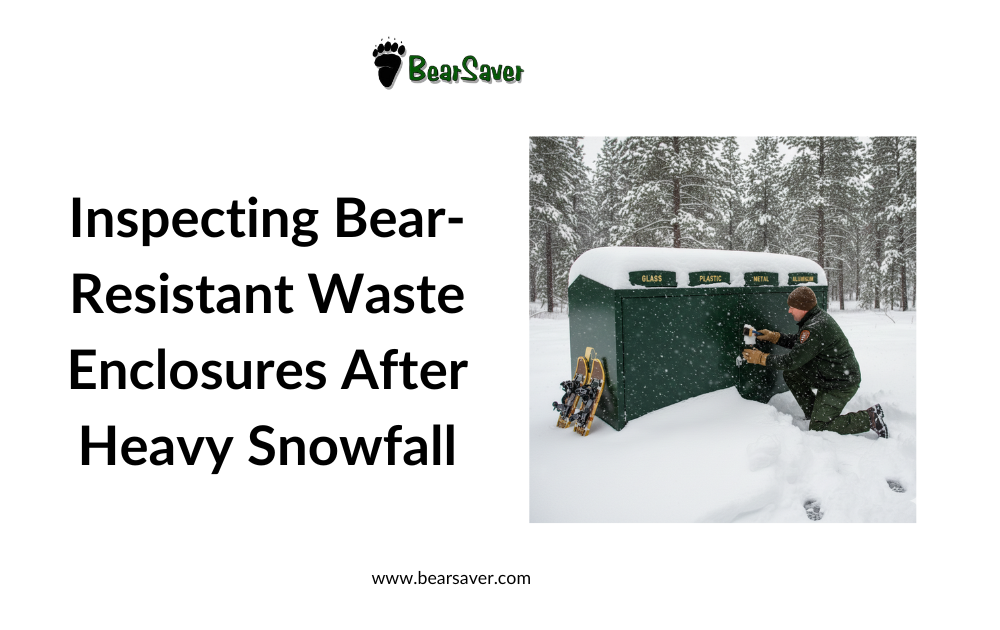
What to Check After Winter Storms to Keep Wildlife Out and Operations Running
Heavy snowfall and winter storms don’t just disrupt roads and walkways—they also put stress on outdoor waste enclosures. For commercial properties in bear country, post-storm inspections are critical. Snow, ice, and freeze-thaw cycles can compromise access points, affect door function, and even weaken anchoring systems, creating opportunities for wildlife to access trash.
Bear-resistant waste enclosures are designed to withstand extreme conditions, but regular inspections after storms ensure they continue performing as intended. Below is a practical, post-snowfall checklist facility managers can follow to protect their sites, maintain compliance, and prevent costly wildlife incidents.
1. Check Access Points for Snow Obstruction or Damage
After heavy snowfall, the first inspection priority should be all access points, including doors, lids, and service openings.
Snowdrifts can block door swing paths or prevent lids from fully closing. Even a small gap can be enough for a bear to exploit. Look for:
-
Packed snow around door frames
-
Ice preventing full closure
-
Warping or misalignment caused by snow load
Bear-resistant enclosures rely on precise closure and secure locking mechanisms. If snow or ice prevents proper alignment, the enclosure may no longer meet bear-resistance requirements.
BearSaver’s MD365 Mini Depot is built with a solid-body rectangular design that helps shed snow more effectively than improvised or lightweight enclosures. Still, post-storm clearing around all access points is essential.
2. Inspect for Ice Buildup on Doors and Hinges
Ice is one of the most common post-storm issues—and one of the most dangerous if overlooked.
Inspect:
-
Hinges for frozen joints
-
Door seams for ice expansion
-
Locking mechanisms for ice intrusion
Forcing frozen doors open can damage hardware and compromise long-term performance. Instead, carefully remove ice using approved de-icing methods that won’t corrode metal surfaces.
BearSaver commercial trash cans and mini depots are engineered for outdoor durability, but routine winter maintenance protects both the enclosure and the people servicing it.
3. Test Door Function and Self-Closing Performance
Once snow and ice are cleared, test every door:
-
Does it open smoothly?
-
Does it close completely without assistance?
-
Does the latch engage fully?
Bears are opportunistic. A door that doesn’t close fully—even by a fraction—can become a repeated target.
The BearSaver MD365 is designed to securely house three 65-gallon carts (195 gallons total) in a single solid-body unit, minimizing external access points. Fewer doors and seams reduce risk, but only if all components function as designed.
If door resistance feels uneven or sluggish, schedule maintenance immediately before normal waste service resumes.
4. Examine Anchoring and Ground Stability
Snowmelt can destabilize soil, asphalt, or concrete pads, especially during freeze-thaw cycles. After a major storm, check:
-
Anchor bolts for loosening
-
Base plates for shifting
-
Concrete pads for cracking or heaving
A bear-resistant enclosure must remain fully anchored to prevent tipping or movement. Even heavy steel enclosures can be compromised if the ground beneath them shifts.
BearSaver units are built for permanent commercial installation, but site conditions change seasonally. Early detection of anchoring issues prevents larger structural problems later.
5. Look for Snow Load Stress on the Enclosure Body
Heavy, wet snow can exert significant downward pressure. Inspect the enclosure body for:
-
Panel bowing
-
Weld stress points
-
Roof deformation
The MD365’s solid-body construction offers excellent resistance to snow load compared to framed or slatted designs, but inspections after extreme storms are still best practice—especially in high-elevation or mountain environments.
6. Confirm Service Access Is Safe and Clear
Waste haulers and maintenance staff need safe, unobstructed access. Ensure:
-
Walkways are cleared
-
Door swing areas are ice-free
-
Snowbanks are not redirecting animals toward the enclosure
A well-maintained waste area discourages both wildlife and unsafe human behavior.
Winter Inspections Protect More Than Trash
Post-snowfall inspections are about more than operational efficiency—they protect people, property, and wildlife. Bears that access human food sources are more likely to become repeat offenders, increasing the risk of relocation or euthanasia.
High-quality, commercial-grade solutions like BearSaver enclosures play a critical role in responsible wildlife management, but performance depends on regular inspection and maintenance—especially after severe weather.
Contact BearSaver
For expert guidance on bear-resistant waste solutions:
📞 800.851.3887
✉️ sales@bearsaver.com